
TikTok Shop is coming to Benelux on 15 June 2026. For brands and agencies already active in influencer marketing, the window to move early is open right now. Other European markets have already shown what social commerce on TikTok can generate at scale. The question for Benelux teams is not whether to take this seriously, but how to build a strategy that is both fast and grounded in the right data, the right creators, and the right tools.
Introduction
TikTok Shop launched in France and Germany in March 2025, and early results tell a compelling story. In Germany alone, an Oxford Economics study found that TikTok Shop generated close to €80 million in gross value added within its first nine months, with more than 25,000 local businesses already selling on the platform and average daily revenues doubling in under six months. In France, adoption has been equally rapid: panel data from August 2025 placed TikTok Shop’s monthly penetration in French e-commerce at roughly 1.13%, already ahead of established players such as eBay, La Redoute, and Zara. Across other EU markets, TikTok Shop recorded triple-digit growth in daily Gross Merchandise Value between August 2025 and February 2026, with over 100,000 European businesses now active on the platform. Now, that same momentum is coming to Benelux.

According to Ecommerce News, the expansion follows the same phased logic that proved successful further west, and TikTok has officially confirmed a 15 June 2026 launch date for Belgium and the Netherlands. For influencer marketing professionals in both markets, this is no longer a trend to monitor from a distance. It is an operational reality weeks away, and the brands that prepare now will have a structural advantage over those that wait.
A Market That Is Ready, But Not Yet Crowded
The Benelux market has all the characteristics that make TikTok Shop a logical next step. Belgium and the Netherlands together represent a digitally mature, highly connected consumer base, with strong e-commerce penetration and an audience that is already deeply engaged with short-form video content. TikTok’s organic presence in both countries is well established. As of early 2025, the platform counted 7.5 million users in the Netherlands and 4.3 million in Belgium. Together, that is close to 12 million active users already engaged with short-form video content in these two markets, which means the infrastructure of creator culture, content habits, and audience behavior is firmly in place. What has been missing until now is the in-app shopping layer that transforms content engagement into direct purchase.
According to The Brussels Times, TikTok Shop is set to launch in Belgium, bringing its integrated shopping experience to a market that has so far watched the format gain traction elsewhere. The Belga News Agency confirmed the expansion into the Belgian online shopping market, describing it as a direct extension of TikTok’s broader European commercial ambitions. In the Netherlands, NL Times reports that the launch is already generating public debate around consumer behaviour, particularly among younger audiences, which signals both the scale of anticipated adoption and the need for brands to show up responsibly from the start.
What makes this moment genuinely interesting from a strategic standpoint is precisely the fact that the competitive field in Benelux is not yet crowded. In France and Germany, brands that moved early on TikTok Shop gained visibility, learned the mechanics of social commerce conversion, and built creator relationships before costs and competition increased. Benelux teams now have a comparable window, with the added advantage of being able to learn from those markets before spending their first euro. That combination of early access and informed preparation is rare, and it will not last long.
Finding Creators Who Actually Reach Your Audience

The single most consequential decision in any TikTok Shop strategy is creator selection. In a market like Benelux, where the audience is geographically specific and linguistically divided between Dutch and French speakers, reach without relevance is not just ineffective, it is actively wasteful. A creator with one million followers means very little if the majority of that audience is based in another country or speaks a different language. This is where data-driven discovery becomes the foundation of everything else.
Stellar’s Influencer Search gives teams access to more than 300 million TikTok profiles, with the ability to filter by audience location, language, engagement quality, and content category. For the Benelux launch specifically, this depth of data is directly actionable. Stellar’s database includes close to 100,000 TikTok profiles with at least 50% Belgian audience composition and approximately 250,000 profiles with at least 50% Dutch audience composition.
They are filterable, searchable parameters that allow a brand or agency to build a creator shortlist based on where the audience actually lives, not where the creator happens to be based or how their profile is categorized.
This distinction matters enormously in the context of TikTok Shop, where the conversion happens inside the app and is therefore entirely dependent on the creator’s audience being in the right market, at the right moment, with access to the product. Sending traffic from the wrong geography to a Belgian or Dutch storefront is not a minor inefficiency. It is a campaign that cannot convert by design. The ability to verify audience composition before any contract is signed is not a nice-to-have feature in this context. It is a prerequisite for the strategy to function at all.
Beyond geography, Social Listening within Stellar allows teams to track how specific topics, products, and content formats are performing organically in the Belgian and Dutch TikTok landscape before they even brief a creator. Understanding what content is already resonating with local audiences, which niches are gaining traction, and which voices are building genuine community in these markets gives teams a meaningful head start in both creator selection and content direction. In a launch phase, that kind of market intelligence is worth more than any amount of post-campaign analysis.
Brand Safety and Profile Quality in an Uncharted Market
Creator discovery at scale is only half of the equation. In a market where TikTok Shop has no established track record, the cost of a poor creator choice is amplified. A brand safety incident in the early weeks of a campaign does not just affect one activation. In a market as interconnected as Belgium or the Netherlands, it can shape how a brand is perceived on the platform for months.
Stellar’s Profile Analysis gives teams the tools to look beyond surface metrics, assessing audience authenticity, follower growth patterns, engagement consistency, and content history before any brief is written or contract signed. A creator who performs well on reach but whose content history includes controversial topics, misleading product claims, or erratic posting behavior carries a risk that engagement rate alone will never surface. The ability to screen for these signals systematically, across hundreds of profiles at once, is what separates a scalable influencer operation from one that runs on instinct.
This diligence also carries a broader strategic dimension. As NL Times reports, the Dutch launch is already generating public debate around impulse buying among younger audiences. Brands that arrive on TikTok Shop with a transparent, well-curated creator strategy will not only perform better commercially. They will also be better placed as regulatory scrutiny around social commerce continues to grow across Europe.
Tracking Performance and Learning From the Competition
Launching on TikTok Shop in Benelux is not a one-time activation. It is the beginning of an ongoing commercial presence in a channel that will move fast, and where the competitive landscape will shift significantly in the months that follow. The challenge for most teams is not a lack of data. It is the absence of a coherent picture. Platform analytics, creator reports, and campaign spreadsheets each tell a fragment of the story, and by the time those fragments are assembled, the moment to act on them has often passed.
This is where having everything in one place changes the operational reality. When Earned Media Value, ROI, and cost tracking sit alongside content monitoring and sentiment analysis in Stellar’s centralised reporting dashboard, teams stop spending time consolidating numbers and start spending it on decisions. In the early phase of a new market strategy, understanding in real time how audiences are reacting to creator content, what language they use, what objections they raise, is intelligence that shapes the next brief directly. Those signals, caught early, are worth considerably more than any retrospective report.
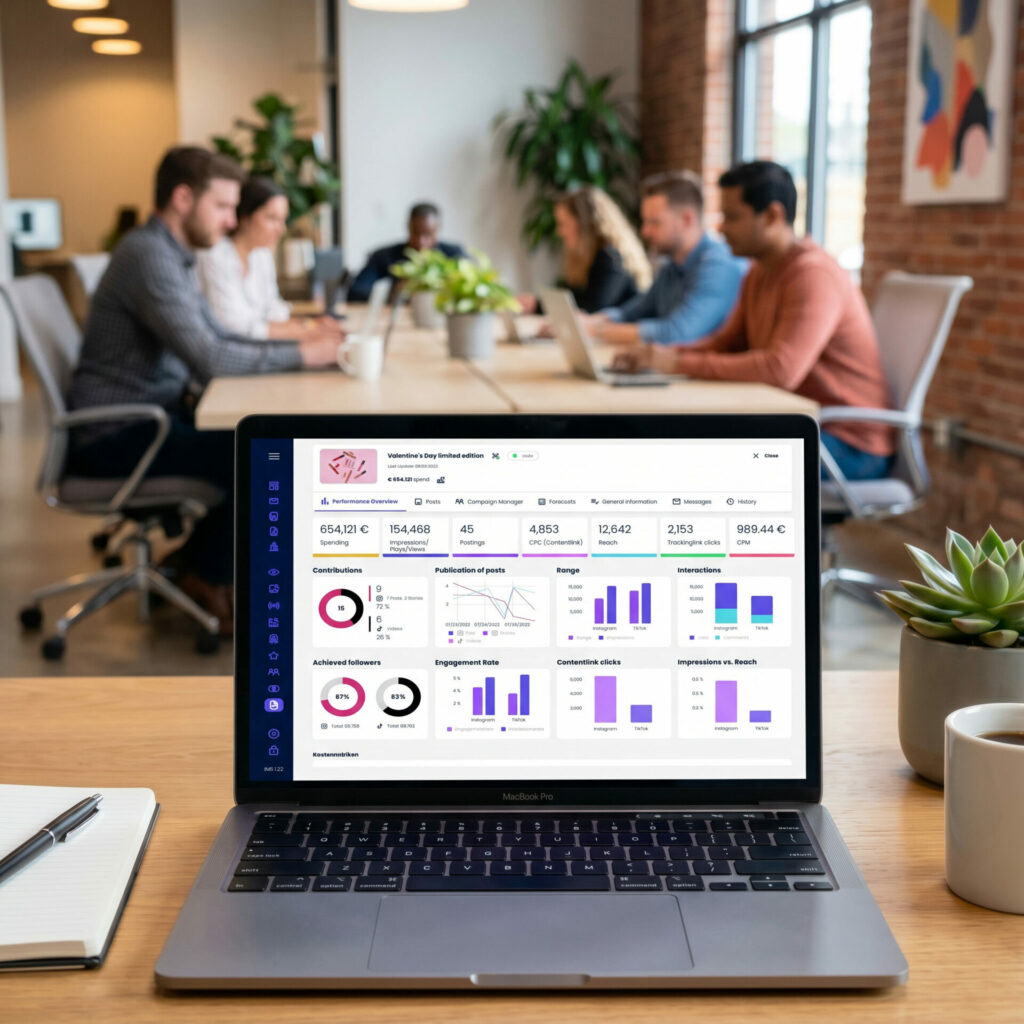
The same logic applies to the wider market conversation. Through Social Listening, teams can track how their brand, their products, and their category are being discussed organically across the Belgian and Dutch TikTok landscape, beyond the creators they have directly activated. And in a market where no brand has yet established a dominant position on TikTok Shop, competitor benchmarking becomes one of the most valuable tools available. The creator partnerships being formed now, the formats being tested, the audience segments being targeted: these are live signals about where the real opportunities lie. Reading them well, and adapting faster than the competition, is precisely what winning the first-mover window looks like in practice.
Conclusion
TikTok Shop’s arrival in Belgium and the Netherlands is one of those moments where the gap between brands that act with intention and those that simply react will become visible very quickly. The market is ready, the audience is already there, and the commercial potential has been demonstrated clearly enough in France and Germany to remove any remaining uncertainty about whether this channel deserves serious investment.
But social commerce on TikTok is not simply an extension of traditional influencer marketing. It requires a more precise approach to creator selection, a stronger commitment to audience quality and brand safety, and a more rigorous infrastructure for tracking performance and reading market signals. The brands and agencies that will lead in Benelux are those that treat this launch not as an experiment to be evaluated later, but as a strategic channel to be built properly from the start.
That means knowing which creators genuinely reach a Belgian or Dutch audience before spending a single euro on activation. It means verifying that those creators meet the brand safety standards that protect both the campaign and the brand’s long-term reputation.

It means monitoring sentiment and performance continuously, not just at the end of a campaign cycle. And it means keeping a clear, data-informed eye on what competitors are doing in a landscape that is still forming.
The first-mover window in Benelux TikTok Shop is open, and the tools to use it well already exist. At Stellar, we have been helping brands and agencies across Europe build smarter, more accountable influencer marketing strategies, and we are ready to help you do the same on this new channel. If you want to move into TikTok Shop in Belgium or the Netherlands with the right data, the right creators, and the right infrastructure behind you, our team is here to support you from day one.
Ready to win the TikTok Shop Benelux launch with the right creators?
See how Stellar helps brands go beyond reach and follower counts, identifying creators with genuine local audiences, verifying brand safety, and tracking what actually converts so you move fast without moving blind.