

In early 2026, Instagram tested an AI feature that quietly tagged shoppable products inside creators’ posts, no permission asked. The backlash that followed exposed the thing influencer marketing actually runs on: not reach, but the trust between a creator and their audience. As platforms automate commerce on top of that trust, brands can no longer treat vetting and monitoring as afterthoughts. The teams that win are the ones who choose the right creators, watch the conversation in real time, and can prove which partnerships move revenue.
A Million Followers, and She Was the Last to Know
In late February 2026, a fashion creator named Julia Berolzheimer found out from one of her own followers that Instagram had started attaching a “Shop the Look” button to her posts. The button used AI to read the items in her content, then served up similar products to buy. She had more than a million followers, and she had no idea the feature was on her account.
What it surfaced was the real problem. As Bloomberg first reported, the tool linked her carefully made content to cheap lookalikes she had never seen. In her words, it was attaching “cheap knockoffs and random items from brands I’ve never heard of, attached to my image, under my name.” Instagram ran the test on a controlled group of users, and according to reporting from Digiday, Glossy, and Modern Retail, neither the creators nor the brands say they were ever asked.
For brands, that is a brand-safety event, not just a creator-relations one. If a platform can drop your category of product next to a creator you partnered with, and quietly route their audience to a knockoff or a rival, the value you paid for leaks out before the first sale. And you would find out the same way Julia did. Late, and from someone else.
Trust Is the Asset, and It Breaks Faster Than Reach
The reaction to “Shop the Look” only makes sense when you remember what audiences are really responding to. Nobody buys because a product appeared on screen. They buy because someone they trust showed it to them.
The numbers behind that are not subtle. A 2025 LTK report found that 84% of consumers trust brands more when they see creator content demoing and reviewing products on a brand’s website, with that trust running especially deep among Gen Z and Millennial shoppers. Nielsen’s long-running research points the same way, with 88% of global respondents trusting recommendations from people they know more than any other channel. That trust is earned slowly, post by post, and it does not transfer to a platform’s algorithm just because the algorithm can read a photo. It is also why Instagram is still the anchor for serious brand work. According to Statista data, 80.8% of US marketers run influencer campaigns on Instagram, more than on any other platform (57.7% use TikTok). The money follows the trust, and the trust follows the creator. So when an automated feature wedges itself between the two, it is putting the most valuable and least replaceable part of the whole system at risk.
Here is the uncomfortable bit for marketers: You cannot control what a platform decides to test on a creator’s account. What you can control is who you partner with, how well you understand their audience, and how fast you notice when something goes sideways. Those are the real levers, and every one of them is a vetting or monitoring problem.
Why This Raises the Bar on Creator Vetting
When a platform can attach commercial meaning to a creator’s content on its own, the creators you pick matter more, not less. A partnership built on a genuine, engaged, real audience can take a hit from a bad platform experiment and keep its footing. A partnership built on inflated followers or a mismatched audience has nothing underneath it to begin with.
That means vetting has to go deeper than a follower count and a polished media kit. Before any budget is committed, you want to know whether a creator’s audience is real, whether their past collaborations fit your standards, whether anything in their history is a brand-safety risk, and how much their reach overlaps with creators you already use.
This is exactly what Stellar’s Profile Analysis is built for. Teams can review creator KPIs, audience demographics, fake-follower rates, community authenticity, and follower overlaps, then flag brand-safety risks and check past collaborations, all before a contract is signed. The logic is simple. The harder it gets to control what platforms do on top of creator content, the more it pays to be certain about the creator underneath it. Good vetting is how you make a partnership resilient to the next surprise feature, because there will be a next one.
The Conversation Moves Faster Than Your Reporting
Notice how the “Shop the Look” story actually broke. Not through an Instagram announcement. A follower spotted it, a creator dug in, and within days it had spread across Substack, Reddit, and the trade press. By the time most brands read about it, the test had reportedly already vanished from some accounts.
That timeline is the whole lesson. When something attaches itself to your brand or your creators, you hear it from the conversation, not from a memo. And patience online is thin. Emplifi’s Social Pulse research found that roughly a third of consumers expect a response on social media within an hour, another third want one the same day, and only 2% will wait more than two days.
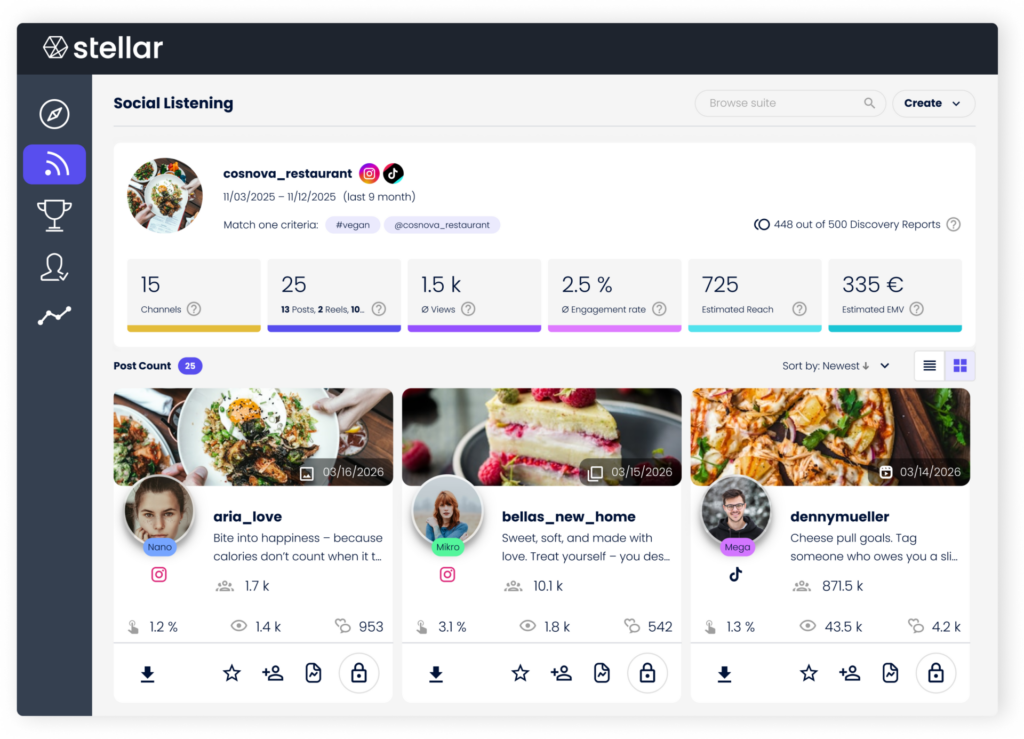
A brand that learns about a creator controversy two weeks late has already missed its chance to shape it. Stellar’s Social Listening is built to close that gap. It tracks brand mentions and creator content across Instagram and TikTok, with historical visibility going back up to a year, so you can catch a problem while it is still forming. The same monitoring works in your favor, too. It surfaces the creators already talking about your brand without a brief, who are often your most credible future partners precisely because nobody paid them to say it.
Prove Which Partnerships Actually Drive Revenue
Underneath the consent debate is a quieter argument about measurement. Vasquez’s point about being “pro-attribution” gets at something brands should care about directly. If a platform can intercept the click between a creator’s recommendation and the sale, then knowing exactly which creators and which content drove real results becomes both your best defense and your best budgeting tool.
This is not theoretical money. Instagram’s commerce push is enormous and still growing, with the global Instagram influencer market estimated to surpass $22 billion in 2025 for the first time, according to Statista, and Reels now accounting for roughly 50% of all time spent on the platform. Spending at that scale without clean attribution means paying for influence you cannot prove.
Stellar’s reporting turns creator activity into evidence. Teams can track reach, engagement, EMV, ROI, and sales performance in real time, connect creator-driven traffic to links and promo codes, and tie social activity to outcomes in Shopify or WooCommerce. Sentiment analysis adds the why behind the numbers, turning thousands of comments into a clear read on how an audience actually responded. When the platform is busy inserting itself into your funnel, the brands that can still measure their own creators clearly are the ones who keep control of the relationship and the budget.
Conclusion
“Shop the Look” looks at first like a story about one glitchy AI feature. It is really a story about where the value in influencer marketing lives, and how easily a platform can reach in and disrupt it. The takeaways come down to four things.
First, trust is the asset. Audiences act on creator recommendations because they believe them, and that belief is far more valuable, and far more fragile, than raw reach.
Second, vetting makes partnerships resilient. When you cannot control platform behavior, choosing creators with real, authentic, well-understood audiences is your strongest protection against the next surprise.
Third, speed decides whether you can respond at all. Issues surface in the conversation first, so real-time listening is the difference between shaping a moment and reading about it after it has passed.
Fourth, attribution keeps you in control. As platforms try to intercept the path from influence to purchase, proving which creators drive revenue protects both your budget and your relationships.
None of this means retreating from social commerce. It means running it on a foundation you actually own: the right creators, watched in real time, measured clearly. Stellar brings profile analysis, social listening, and full campaign reporting into one workflow, so brand safety, trust, and revenue can be handled together instead of in fragments. The platforms will keep experimenting on top of creator content. Your job is to be certain about what sits underneath it, and we are here to help you get there from day one.
Ready to protect the trust your influencer marketing runs on?
See how Stellar helps brands vet creators before they sign, monitor the conversation in real time, and prove which partnerships actually drive revenue, so you stay in control no matter what the platforms decide to test next