
Influencer marketing results are not fully visible through paid posts alone. The conversations that move purchase decisions, build trust, and reveal your strongest future creators are mostly organic, and most teams never measure them. Social listening closes that gap. It surfaces earned content, quantifies real impact through earned media value, and shows what the competition is doing, all while there is still time to react. With Stellar, influencer marketing managers can read those conversations in hours rather than weeks and adjust activity before a campaign window closes.
The conversations you are not measuring
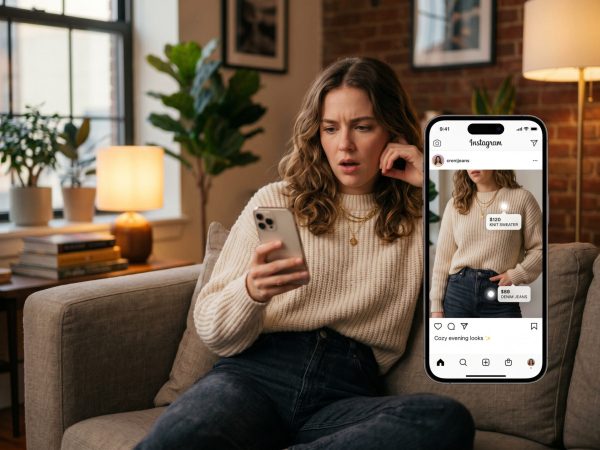
Most influencer reporting still revolves around the content a brand paid for. The sponsored post, the agreed deliverables, the reach and engagement attached to a contract. That picture is accurate, but it is incomplete, because the majority of relevant conversation about a brand happens outside any media plan. Customers post unprompted, fans tag the brand, and creators who were never briefed mention a product because they genuinely use it. None of that appears in a standard campaign report, yet it carries real commercial weight.
The discipline that captures this layer is social listening, and it has moved firmly into the operational core of influencer marketing. The global social media listening market is valued at roughly 9.3 billion dollars in 2025 and is projected to reach 20.5 billion by 2031, more than doubling in the next years
That growth reflects a simple shift in expectation: brands increasingly require automated capture of earned conversation, not occasional manual checks. This article looks at why social listening influencer marketing has become a measurement question, a discovery engine, and a competitive instrument all at once, and why speed is now the part that separates the teams that act from the teams that report.
The blind spot in influencer reporting
When a campaign report only counts paid placements, it understates the brand’s actual presence and, more importantly, its actual influence. Earned and organic content is where a large share of purchase intent is formed. The data here is consistent and hard to ignore. Around 79% of consumers say user generated content significantly influences their purchasing decisions, and brands that feature UGC see roughly 2% higher conversion rates than campaigns that do not. Trust follows the same pattern, with Nielsen data showing that 88% of people trust recommendations from people they know above any other form of advertising.
For an influencer marketing manager, the implication is direct. If organic and earned content drives a meaningful portion of results, then leaving it out of measurement produces a number that is both too low and strategically misleading. A campaign might look modest on paid metrics while triggering a wave of authentic posts from real customers, and that second effect is often the more durable one. Treating non-paid content as something to track and value, rather than a pleasant side effect, is the first correction social listening makes to influencer reporting.
Finding creators among the people already talking about you
Discovery is usually framed as a search problem, where you scan databases for creators who match an audience and a budget. Social listening reframes it as a recognition problem. Some of the most credible creators for a brand are the people already posting about it without being asked. They have proven affinity, their content reads as authentic because it is, and the path from organic fan to official ambassador is short and natural.
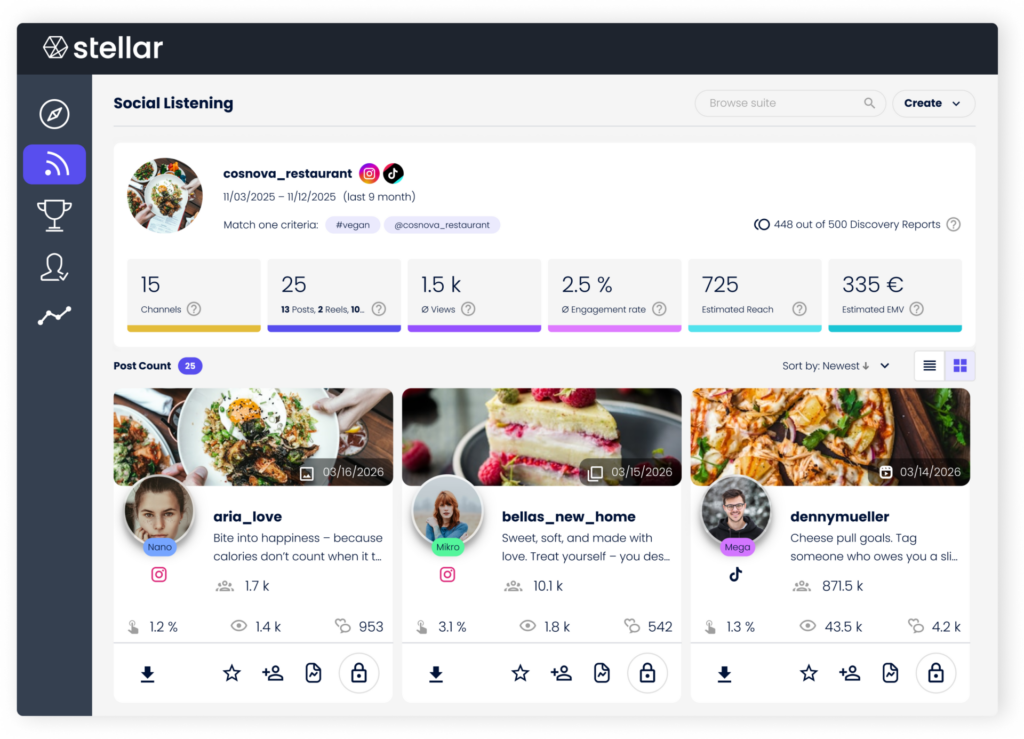
This is where Stellar’s Social Listening becomes practical rather than theoretical. The tool monitors brand mentions and tracks user generated content from real customers across Instagram and TikTok, identifying who is already talking about your brand organically, with visibility going up to one year into the past. That historical depth matters, because it lets a team see sustained advocates rather than one off mentions, and distinguish a genuine fan from a passing reference. The strategic move is then straightforward: turn your most engaged customers and fans into official ambassadors, and build partnerships with creators who already understand and like the product. Identifying that pool is faster and more reliable when the listening is automated, and it consistently surfaces names that a conventional database search would miss.
Measuring real impact and the earned media value of everything
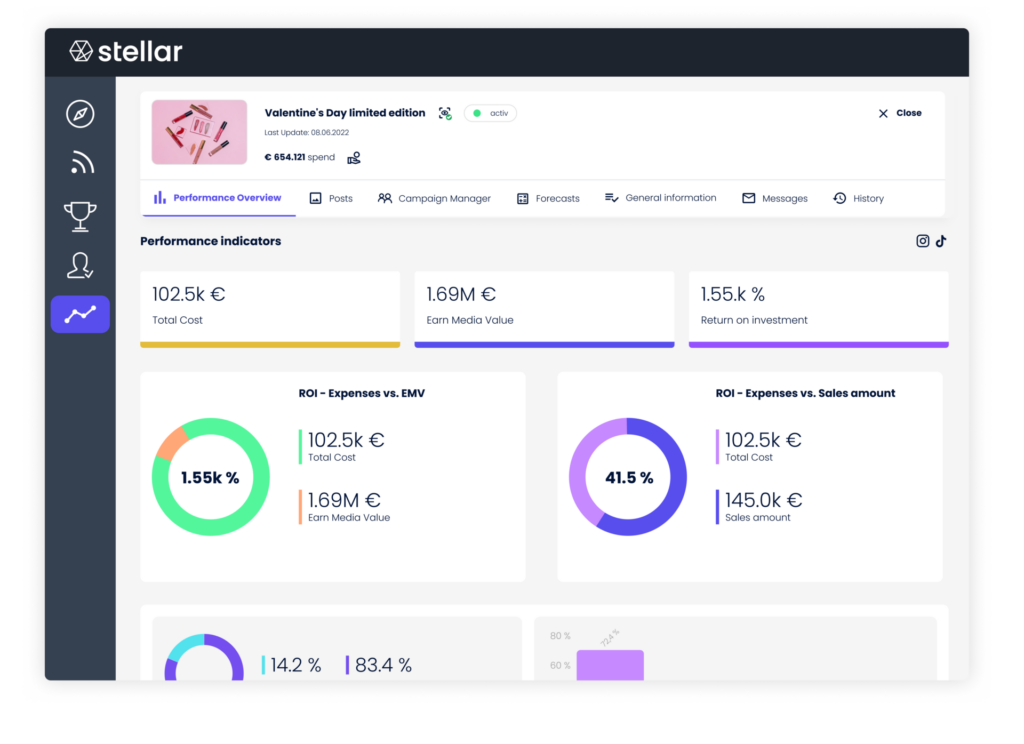
Once earned content is visible, the next question is what it is worth. Earned media value gives influencer teams a way to express the impact of non-paid content in terms a CMO understands, and it should sit alongside paid performance rather than apart from it. The scale of the underlying market makes this worth getting right, with regional analyses placing influencer related spend in Europe at around 15 to 20 billion euros in 2025. A meaningful share of the value generated against that spend comes from organic mentions that never appear on an invoice, which is exactly the value EMV is meant to capture.
Measuring this properly is an operational task, and it is one Stellar handles directly. Through its results and reporting module, Stellar measures
EMV and ROI as part of every campaign, with automated calculations sitting alongside full cost monitoring in a single dashboard. That means a team can see the true value of each collaboration, combine earned and paid signals into one coherent picture, and produce reporting that holds up in front of finance and leadership. It also reflects a conviction that runs through Stellar’s approach: influencer marketing is becoming genuinely measurable, and the teams that treat it that way make better budget decisions for every campaign that follows. Sentiment analysis adds the qualitative layer on top, turning thousands of comments into a readable signal of how audiences actually responded, so the EMV figure is supported by an understanding of why a campaign performed or fell flat.
Watching the competition and adjusting before the window closes
Social listening points outward as well as inward. The same monitoring that surfaces your own earned conversation can reveal which creators your competitors collaborate with, which formats they are leaning into, and how audiences are responding to them. That intelligence shortens the distance between noticing a tactic and testing your own version of it. Stellar’s Competitor Benchmarking sits naturally beside social listening for exactly this reason. Social listening shows where influence is already happening; benchmarking shows how you compare against the field; and used together, they let a team understand performance and adjust activity quickly rather than waiting for a post-campaign-review.
Speed is the part of this that has changed most, and the consumer data makes the stakes clear. According to Emplifi’s Social Pulse research, roughly a third of consumers expect a response on social media within one hour, another third want one the same day, and only 2% are willing to wait more than two days. A conversation that a brand notices two weeks late is a conversation it can no longer shape. This is also where AI earns its place. The volume of organic mentions across platforms is far beyond what any team can read manually, so AI-powered processing is what makes real-time understanding possible at all. The point is not to replace the marketer’s judgment but to deliver the signal fast enough and clearly enough that a human can act on it well. That balance, where AI improves decision-making rather than substituting for it, is precisely how listening should function inside an influence team.
Conclusion
The case for social listening influencer marketing comes down to four things working together.
- It corrects a measurement blind spot by valuing the earned and organic content that paid reporting ignores.
- It turns discovery into recognition by surfacing the credible creators already advocating for your brand.
- It quantifies real impact through earned media value and ROI, so the full contribution of a campaign is visible rather than half hidden.
- And it reads the competitive landscape in time to do something about it.
None of these is a luxury layer on top of a campaign. Each one addresses a gap that ordinary reporting leaves open, and each one becomes more useful when the listening happens continuously and at the speed the market now expects.
For influencer marketing managers across Europe, the practical takeaway is that the tools to close these gaps already exist and increasingly sit in one place. Stellar combines social listening, competitor benchmarking, automated EMV and ROI measurement, and sentiment analysis so that earned conversation, performance, and competitive context can be read together rather than in fragments. The aim is not more dashboards for their own sake, but influencer marketing that is measurable, responsible, and operationally sound, with AI handling the volume so that people can focus on the decisions that genuinely require judgment. The conversations that decide your results are already happening. The only real question is whether you are seeing them in time to respond.
Ready to see the conversations behind your influencer results?
See how Stellar helps brands move beyond paid reach alone, surfacing organic conversation, measuring EMV and ROI on every campaign, and benchmarking against competitors in real time, so you know what your influencer marketing is actually worth and where to act next.