TL;DR: Social search is taking over discovery. People now find answers on TikTok, Instagram, and YouTube through creators, and Google is increasingly surfacing eligible Instagram posts too. That is why search-based influence matters: brands win by partnering with creators who answer real audience questions, not just trends. This article shows why many strategies fail (reach over intent), how AI-powered discovery helps find creators who already rank for key topics, and why evergreen creator content keeps brands discoverable long after campaigns, especially in Europe’s multilingual, cross-border market.
If You’re Not Showing Up in Feeds, You’re Not Being Found
For more than two decades, online discovery started with one simple action: typing a question into Google. But that behaviour is changing faster than most brands realize.
Today, users increasingly search directly on social platforms such as TikTok, YouTube and Instagram to find recommendations, tutorials and product advice. According to recent research from Adobe, almost half of consumers already use TikTok as a search engine to discover products, reviews and information. At the same time, the scale of these platforms makes the shift impossible to ignore. TikTok alone now counts more than 200 million monthly users in Europe, turning it into one of the continent’s largest discovery platforms.
Even Google has publicly acknowledged the trend. During the Fortune Brainstorm Tech conference, a Google executive revealed that around 40% of Gen Z users prefer TikTok or Instagram over Google Search for discovery, especially when looking for restaurants, lifestyle inspiration or product recommendations.
This behavioural shift is exactly what Stellar identified in its 2026 Influencer Marketing Trend Guide as the emergence of a new discovery model where feeds, creators and communities replace the traditional search bar. Instead of waiting for users to type a query, social platforms anticipate interests and surface relevant content through algorithms and creator expertise. In other words, discovery now starts before the question is even asked.
For brands, this fundamentally changes how visibility works online. If consumers increasingly rely on creators to answer their questions, influencer content becomes the new layer of discoverability. Brands that appear inside these conversations gain attention, trust and ultimately influence purchasing decisions. Those that do not risk disappearing from the discovery journey entirely.
Or put more bluntly: if your brand isn’t ranking on TikTok, it may already be invisible.

Search-Based Influence: Why Creator Content Is the New SEO
For years, brands optimized their visibility around Google. They invested in keywords, backlinks and website content to rank in search results. Whoever appeared at the top of the page won the click. But on social platforms, the logic is different.
Instead of websites competing for attention, creators now compete to answer the questions users search for. Tutorials, comparisons and product reviews have become the new search results.
This is what we at Stellar Tech describe as search-based Influence: a model where creators produce content aligned with what audiences actively search for across social platforms. A skincare creator might build videos around topics like “vitamin C vs niacinamide” because users frequently search for skincare comparisons. A fitness creator may focus on “beginner home workout routines.” Food creators follow search patterns such as “high-protein meal prep” or “healthy recipes on a budget.”
In other words, content is no longer created only for entertainment or trends. It is increasingly produced in response to measurable user intent. Platforms themselves are accelerating this shift. TikTok introduced Creator Search Insights, a tool that shows creators which topics people are actively searching for and where content gaps exist. This allows creators to align their videos with real demand rather than relying purely on viral trends. For brands, the implication is profound.
Influencer marketing is no longer just about amplifying reach or jumping on cultural moments. It is becoming a strategic way to occupy the topics consumers are already searching for. Instead of asking “Which creators have the biggest audience?”, marketing teams increasingly need to ask:
- Which creators already rank for the topics our audience searches?
- Which creators are trusted sources within our category?
- Which creators produce content that remains discoverable over time?
Because when creators answer the questions users are searching for, they don’t just generate engagement. They become the gateway through which consumers discover brands in the first place.
Google Is Now Surfacing Social Content
Until recently, “social search” mostly stayed inside social apps. That wall is coming down. Since July 10, 2025, Google can index eligible public content from professional Instagram accounts (Business and Creator), meaning posts and Reels can be discovered from the open web, not only from the Instagram feed.
For influencer marketing teams, this is a big shift in mechanics. A creator’s Instagram post can now influence two discovery journeys at once: in app discovery through Reels and Explore, and SERP visibility when people search on Google. That makes creator content part of your search footprint, whether you planned for it or not.
For a deeper, practical breakdown, we also shared a set of actionable best practices on how brands can boost discoverability through the power of creator content on Instagram. You may discover them in our Stellar blog by clicking here.
Now zoom out. In the Stellar 2026 Influencer Marketing Trend Guide, we define this new reality as the Search Triangle – feeds, creators, communities:
- Feeds act as recommendation engines that anticipate needs. People discover before they even type a question.
- Creators become the trusted layer that answers intent, not just trends.
- Communities become the decision layer, where recommendations get validated in group chats, private spaces, and niche.
The practical consequence for brands is simple: discoverability is no longer centralized. Your visibility is now built across multiple surfaces at once: recommendation feeds, creator content, and the community spaces where people validate decisions. And because search engines increasingly surface social posts, strong creator activations can drive discovery both inside platforms and in Google search results.
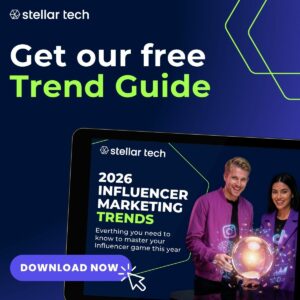
To get the full model and the Search-Based Influence examples, we recommend downloading our 2026 Influencer Marketing Trend Guide that also includes 7 trends and thoughts of more than 20 experts.
Why Most Influencer Strategies Fail at Search-Based Influence
Most influencer programs still pick creators the old way: reach, aesthetic fit, and a feed that “looks on brand.” That can work for awareness. It fails when the goal is discoverability, because search-based influence rewards a very different set of signals.
What actually wins in this new model is:
- Topical authority: creators who are known for a topic, not just a vibe
- Repeated coverage of the same intent themes: consistent content around the questions people keep asking
- Formats that answer questions: tutorials, comparisons, reviews, and explainers that match real search behaviour
Here are three quick “looks good but fails” patterns you will recognize instantly:
- The trendy creator who never answers category questions
They post what is hot, but rarely publish content that maps to “best X for Y”, “X vs Y”, “how to”, “is it worth it”. The content performs in the moment, then disappears. Great for a spike, weak for long term discoverability. - The wrong audience for the job
The creator looks perfect, but their audience is not in the right intent stage. You get views and likes, but not the comments that signal consideration, not the saves, not the “where do I buy” questions. Search-based influence needs creators who attract people already looking for answers. - The unclear content problem
Even strong creators can underperform when the content has no clarity. No clear question being answered, no context, no readable framing. If users cannot immediately tell what the post is about, the algorithm struggles to categorize it, and people scroll past.
The result is predictable: campaigns look busy, but the brand does not become more findable where discovery actually happens.
The Shortcut to Finding Creators Who Already Rank
Now comes the uncomfortable truth: you cannot solve this with manual scrolling.
When ranking depends on content patterns, topic authority, and consistency across thousands of micro niches, manual discovery does not scale. You will miss the creators who quietly dominate intent themes, and you will overpay for creators who only spike on trends.
This is where an influencer marketing platform becomes infrastructure.
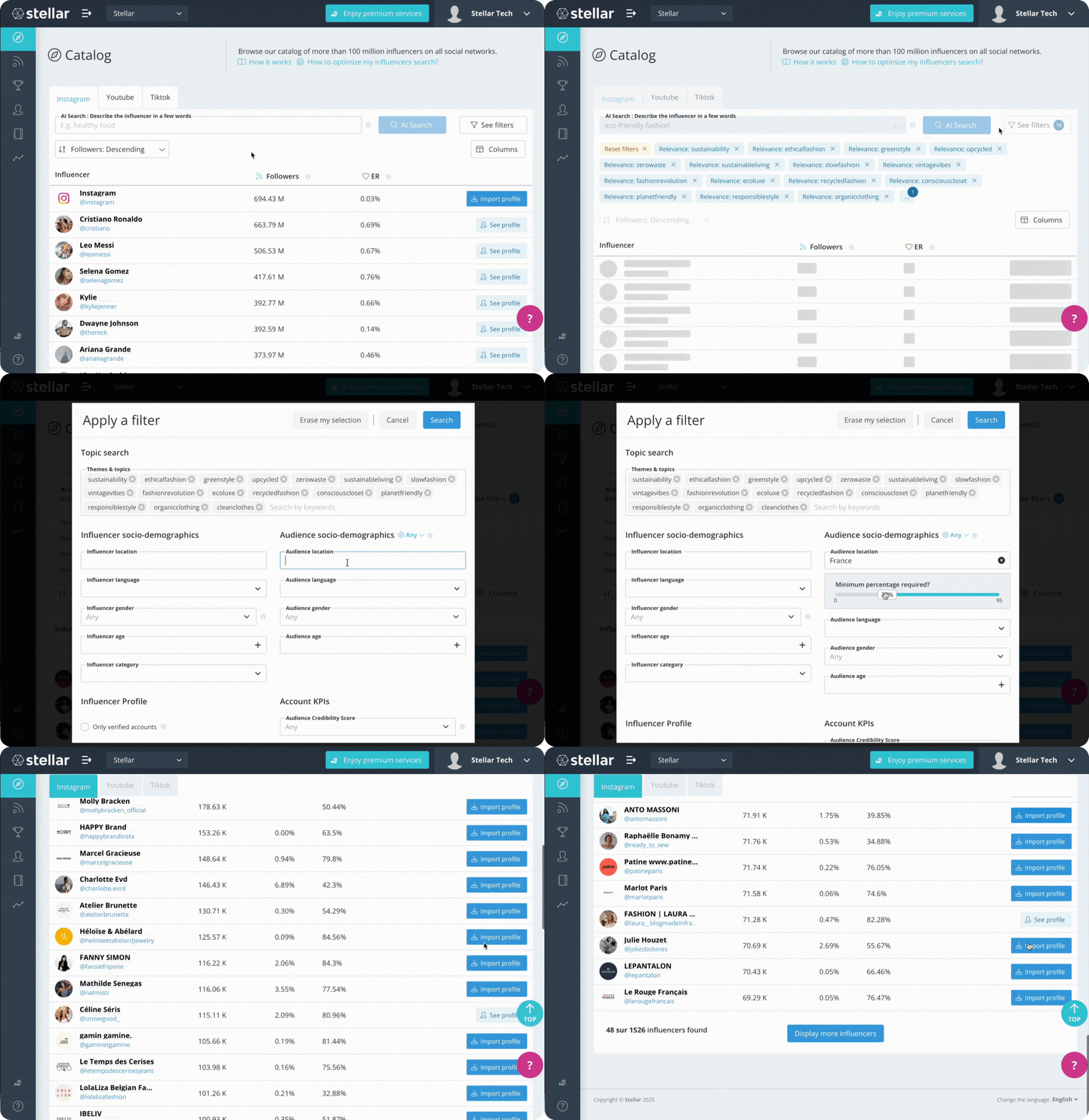
With Stellar, teams can discover and evaluate creators at scale through AI-powered creator discovery across a database of 410 million profiles on Instagram, TikTok, and YouTube, so you can surface creators who already show up in the topics and conversations your audience is actively searching for. Even better, Stellar lets you quickly spot critical topics pre-indicated by AI thank, helping you assess brand fit and potential risk signals early on with our feature Brand Safety, before you move a creator into your shortlist.
What this enables in practice:
- A faster shortlist based on topical relevance, not guesswork
- Consistent creator evaluation across platforms, so you can compare creators in a structured way
- Campaign planning that maps to discoverability goals, meaning you build partnerships around the themes that drive search behaviour, not only around short lived trends
In a world where creators are becoming the answers, the advantage is simple: brands that identify the right creators early do not just participate in culture. They become discoverable inside it. At the same time
Why This Matters Even More in Europe
Europe is not just “catching up” to TikTok driven discovery. It is one of the biggest arenas where this shift is already playing out at scale. With 200+ million monthly TikTok users in Europe, the platform is no longer a nice to have channel. It is a core place where people discover products, creators, and opinions long before they ever land on a brand website.
What makes Europe uniquely important for search-based influence is that discovery is often cross-border and multilingual by default. A trend can start in France, get validated by creators in Belgium, and spike demand in the Netherlands within days. For influencer teams, that means visibility is not only about being present, but being findable in the right language, in the right context, and in the right creator ecosystems.
A practical example: the same product category can require different intent framing by market.
- In France, skincare discovery often leans into routines and sensorial language, with creators building authority through “routine” style explainers and comparisons.
- In Belgium, audiences may split by language and community, so visibility can depend on selecting creators who naturally speak to those distinct clusters.
- In the Netherlands, search behaviour is often more direct and utility-driven, which can favor clearer formats like comparisons, tests, and “best for” answers.
In other words, Europe amplifies both the opportunity and the risk. If your creator strategy is not discoverable across feeds, through creators, and inside communities, you do not just miss attention. You lose the new search battle in the markets where discovery travels fastest.
Conclusion: Visibility Has Moved
The shift is clear. Creators are becoming the answers. People no longer rely on a single search bar to decide what to buy, what to try, or what to trust. They discover in feeds, learn through creator content, and validate decisions inside communities. Even search engines are increasingly reflecting that reality by surfacing social content beyond the platforms themselves.
What we hope you have learned in this article is simple, but it changes everything:
- Influencer marketing is now a discoverability channel, not only an awareness channel.
- Search-based influence rewards relevance, not just reach.
- The brands that win are the ones that show up consistently in the questions audiences actually ask.
One final layer makes this even more powerful: evergreen content. Viral moments come and go. But creator content that answers recurring questions can keep generating discovery long after a campaign ends. This is where influencer marketing starts to behave like search. It compounds. It builds authority over time. It keeps working while you plan the next launch.
The takeaway for teams is not to chase every trend harder. It is to build a strategy that makes your brand consistently findable. Across the right topics, with the right creators, in the right formats, for long enough to matter.
Because in the new search era, visibility is not a one-off win. It is a system.
Ready to increase your own visibility with strong creators?
Book your demo and discover how Stellar helps you finding the best influencers as well as tracking your campaigns for the most effective influencer campaigns.